
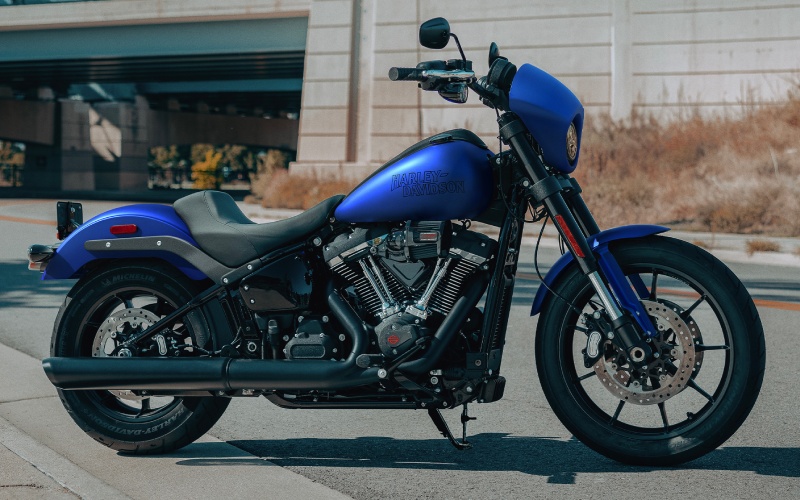
Liberty Harley-Davidson® - How Do the Rider Safety Enhancements on the 2026 Harley-Davidson® Low Rider® S increase security for Staten Island, NY riders?
Riding across borough connectors and waterfront parkways means dealing with sudden lane changes, shifting pavement, and weather that can go from dry to slick in minutes. That is exactly where the Rider Safety Enhancements on the 2026 Harley-Davidson® Low Rider® S start to shine, offering smart, unobtrusive support when traction and braking margins tighten up. If you split your seat time between neighborhood streets, expressways, and long bridges near the coast, the way this motorcycle blends performance with intelligent assistance can be a real advantage.
What the Rider Safety Enhancements Include
The system suite is designed to help the bike maintain traction when accelerating, braking, or decelerating — and to adapt when you are leaned over. Core elements include Anti-lock Brake System (ABS), Traction Control System (TCS), Drag-Torque Slip Control System (DSCS), and Tire Pressure Monitoring System (TPMS). Cornering Enhanced versions (C-ABS, C-TCS, and C-DSCS) factor in lean angle to modulate intervention mid-corner, supporting smooth, predictable control when you are committed to a line.
In day-to-day riding around Staten Island, NY, that means fewer surprises if you hit paint stripes, metal plates, or patched asphalt while on the brakes or rolling into the throttle. The systems do not replace rider skill — they extend your margin for error when the surface or situation changes fast.
How It Feels on the Road
On dry pavement, you notice the safety tech mostly as confidence. ABS helps keep the bike settled during abrupt stops, and the Cornering Enhanced version is especially helpful if you need to trail some brake pressure past turn-in. TCS and C-TCS keep the rear tire from spinning excessively when the road gets dusty or damp, while DSCS and C-DSCS reduce rear-wheel hop or slip if you downshift aggressively or roll off hard.
Importantly, the tuning feels progressive rather than intrusive. Instead of cutting power abruptly, it tempers slip to keep the chassis composed. That behavior pairs well with the Low Rider® S performance fundamentals — a 43 mm inverted fork, hidden coil-over monoshock, and a 63.6 in. wheelbase — for a planted, connected feel.
Ride Modes That Match Your Route
Selectable ride modes complement the safety systems by tailoring throttle response and intervention levels. Commuting through traffic? Choose a mode that softens the initial response. Opening up on a clear stretch? Select a more aggressive map and enjoy the Milwaukee-Eight® 117 High Output motor’s 114 HP and 128 ft-lbs of torque with crisp delivery. Riders who transition frequently between surface streets and expressways will appreciate how easy it is to adapt the bike’s character without digging through complicated menus.
Real-World Scenarios Where It Helps
- Bridge grates and painted surfaces: Cornering Enhanced ABS and TCS help the bike stay composed on slick metal and paint, especially during light braking or steady throttle.
- Patchy or cold pavement: TCS moderates wheelspin on surfaces with mixed grip, while suspension geometry keeps steering precise.
- Abrupt deceleration: DSCS smooths rear-wheel behavior during hard roll-off or quick downshifts, reducing the chance of a step-out.
- Low visibility hours: The All-LED Lighting Package and the bike’s balanced chassis increase visibility and control when traffic density is highest.
These scenarios happen every week in the metro area. Having the motorcycle quietly watch your blind spots — traction at either end of the bike and tire pressures via TPMS — helps you focus on reading traffic and placing the machine exactly where you want it.
Chassis and Braking Complement the Tech
Hardware matters as much as software. The 4-piston fixed front and 2-piston floating rear calipers bite split 7-spoke floating rotors for a strong, linear braking feel. The 43 mm inverted fork steers with precision, while the monoshock’s hydraulic preload adjustment makes it easy to keep the bike balanced if you add luggage or gear. Michelin® Scorcher 31 tires — 110/90B19 front and 180/70B16 rear — are a confident match for the chassis geometry and Rider Safety Enhancements, delivering grip you can trust across varied surfaces.
Who Benefits Most?
- Daily urban riders: Those navigating traffic, construction zones, and unpredictable surfaces gain the most from the cornering-enhanced features.
- Weekend sprinters: Riders who enjoy spirited runs will appreciate the consistent chassis behavior when braking deep or accelerating early.
- All-season commuters: Anyone who rides through wet, cold, or dusty stretches benefits from traction management and TPMS visibility.
Even experienced riders value an extra layer of support when conditions move outside the plan. The key is that the Low Rider® S systems fade into the background until you need them.
Bottom Line for Metro Riders
In a region where a single ride can include city stop-and-go, exposed bridge crossings, and fast-flowing lanes, the Rider Safety Enhancements and ride modes on the 2026 Harley-Davidson® Low Rider® S make a real, tangible difference. They add composure, improve consistency, and help preserve your attention for the next decision point. That is what modern performance should feel like — a motorcycle that does not dull your inputs but sharpens them.
If you want to explore fit, finishes like Aurora Blue Denim, and accessory options that complement the Low Rider® S performance-first ethos, connect with Liberty Harley-Davidson®. Our team is serving Staten Island, Newark, NJ, and Elizabeth, NJ, with guidance rooted in real-world riding, from daily commutes to weekend escapes.