
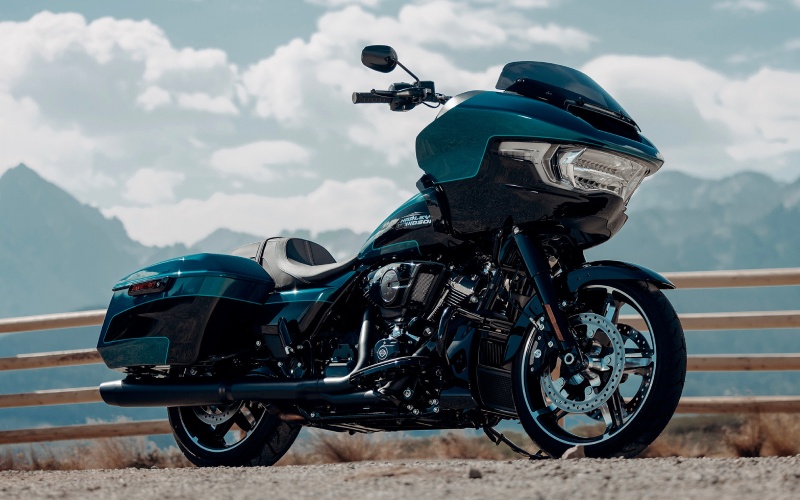
Liberty Harley-Davidson® - Is the 2026 Harley-Davidson® Road Glide® Stable in Bridge Crosswinds near Staten Island, NY?
Riders who cross the Verrazzano-Narrows, Goethals, Bayonne, or Outerbridge Crossing know that coastal gusts and truck buffeting can turn a routine commute into a white-knuckle moment. That is exactly why many local shoppers ask about crosswind stability when considering the 2026 Harley-Davidson® Road Glide®. At Liberty Harley-Davidson®, we spend a lot of time helping Staten Island, NY, riders understand how this Grand American Touring motorcycle behaves in real-world bridge conditions, and what setup choices can elevate confidence mile after mile.
The 2026 Harley-Davidson® Road Glide® arrives lighter and more refined, powered by the liquid-cooled Milwaukee-Eight® 117 motor and anchored by ride-tuned suspension, selectable ride modes, and the Skyline™ OS 12.3-inch display. Under the styling you recognize, there are engineering decisions that matter when the wind funnels across The Narrows or kicks up over the Arthur Kill. Here is how it all comes together for stability you can feel.
Why crosswind stability matters on Staten Island bridges
Bridges around Staten Island, create a perfect corridor for gusts to accelerate. Mix in passing box trucks, expansion joints, and the occasional wet patch from mist or rain, and a touring bike needs to hold a steady line without demanding a death grip from the rider. The goal is predictable steering, planted chassis feedback, and systems that subtly assist when traction or braking surfaces change mid-span.
In these conditions, the qualities that separate motorcycles are front-end composure and how wind loads interact with the steering. A design that reduces unwanted bar inputs and keeps weight distribution neutral will feel calmer when a gust hits, whether you are cresting the Verrazzano-Narrows or easing past high-profile vehicles in the center lanes of the Goethals.
What gives the Road Glide® an edge in gusty conditions
Start with the redesigned Sharknose fairing. Because the fairing on the Harley-Davidson® Road Glide® is frame-mounted rather than fork-mounted, wind forces act more on the frame and less directly on the handlebars. That reduces the “sail effect” at the bars, which means fewer sudden steering inputs from crosswind gusts or bow waves when you pass tractor-trailers. The result is calmer feedback through your hands and a steadier line across long spans.
Chassis geometry also plays a role. With a 64-inch wheelbase, 26 degrees of rake, and 6.8 inches of trail, the 2026 Harley-Davidson® Road Glide® emphasizes straight-line tracking and stability. The 49mm Dual Bending Valve front fork and dual outboard emulsion rear shocks with preload adjustability are tuned for touring loads, so the bike resists pitching and stays composed when a side gust arrives at the same time you hit an expansion joint.
Aerodynamics and rider positioning contribute as well. The fairing’s shape, LED signature lighting, and windshield work together to direct airflow smoothly around the rider, while the seat design helps keep you anchored during a gust. Adjustable handlebars allow you to fine-tune leverage at the grips, which pays off during wind events by encouraging a relaxed upper body and steady inputs.
Tire contact and feedback matter when the deck is breezy or damp. The Dunlop® Harley-Davidson Series bias blackwall tires — 130/60B19 front and 180/55B18 rear — provide a predictable footprint, and the Tire Pressure Monitoring System (TPMS) alerts you via the display if pressures drift. Correct pressures maintain the tire’s designed profile, which is essential for neutral steering in crosswinds.
Setup and fit: small adjustments make a big difference
Fit is foundational to stability. With a laden seat height of 26.6 inches, many riders can get firm footing at toll plazas and in slow-moving traffic approaching bridge ramps — a small but meaningful confidence boost when the wind is swirling at low speed. From there, adjust the handlebars so your elbows are slightly bent, and your wrists are neutral; this posture makes it easier to absorb gusts without over-correcting.
Before you head toward the Outerbridge or Bayonne, set rear shock preload to match your load — rider only, rider plus passenger, or a fully packed weekend. Balanced preload keeps the chassis level, preserving steering geometry. Distribute weight evenly between the saddlebags (the Road Glide® offers 2.42 cu ft of luggage volume), and stow heavier items low and centered to reduce the bike’s roll response in crosswinds.
- Lane position on bridges: Favor the lane position that gives you the most buffer from high-profile vehicles and crosswinds, adjusting to the windward side when appropriate and returning to center when gusts subside.
- Look through the gust: Keep your eyes up and focus on the far end of your lane; a light grip and relaxed elbows prevent abrupt steering inputs when a side blast arrives.
- Throttle strategy: Maintain a steady, slightly positive throttle to stabilize chassis loading; avoid abrupt roll-off that can unsettle the rear over joints or steel plates.
- Passing large vehicles: Anticipate the push-pull bow wave as you approach and clear the front of a truck, adding a smooth counter-steer nudge as needed without fighting the bars.
- Preload and tire pressure: Set preload for your load-out and confirm tire pressures with TPMS or a gauge before you roll — small deviations are noticeable in crosswinds.
These habits pair naturally with the Road Glide® hardware, letting the chassis and fairing do their best work while you ride with a calm, consistent input style.
Rider Safety Enhancements that support confidence
Wind is only part of the story on long spans — surfaces can change quickly, too. Harley-Davidson’s Rider Safety Enhancements on the 2026 Harley-Davidson® Road Glide® add a safety net without intruding on your control. Cornering Enhanced Anti-lock Brake System (C-ABS) and Cornering Enhanced Electronic Linked Braking (C-ELB) help the bike maintain your intended path if you need to brake while leaned in a lane transition or when a gust nudges you off line. The system adjusts brake pressure based on lean angle to help preserve traction.
Cornering Enhanced Traction Control System (C-TCS) and Cornering Drag-Torque Slip Control System (C-DSCS) work in the background during throttle changes, helping the rear tire maintain grip if a gust coincides with a downshift or quick roll-off on a slick patch. Vehicle Hold Control (VHC) is a practical bonus when you stop on an uphill bridge ramp — one firm squeeze at a stop keeps the bike from rolling until you’re ready, so you can launch smoothly even in swirling winds.
Technology that helps you focus on the lane
The Skyline™ OS 12.3-inch full-color TFT display consolidates navigation, bike data, and audio so you spend less time searching menus and more time scanning the lane. Turn-by-turn guidance — including Apple CarPlay compatibility — allows you to keep your eyes up and your hands steady, which is invaluable when the crosswind asks for your attention. Bright LED lighting boosts your conspicuity in fog, rain, or low-contrast conditions so others can see you sooner on long, open spans.
Selectable ride modes let you tailor throttle response and engine braking to match conditions. A calmer throttle map can help smooth rider inputs on gusty days, while the Milwaukee-Eight® 117’s broad torque keeps you in the fat of the powerband without abrupt surges — useful when a steady roll-on is the right answer in turbulent air.
If you ride the Staten Island corridor often, our team at Liberty Harley-Davidson® in Rahway, NJ, can help you fine-tune the 2026 Harley-Davidson® Road Glide® for your routes. We can walk you through handlebar and windshield options, suspension preload guidance for solo or two-up touring, and luggage solutions that keep weight low and balanced. Visit us just across the Goethals or Outerbridge to see how the Road Glide® can turn a windy bridge crossing into a confident, composed part of your day.